rumivox.
One vocal take in. Tuned chops out, or play it from the keys.
A vocal chain you can also play from a keyboard.
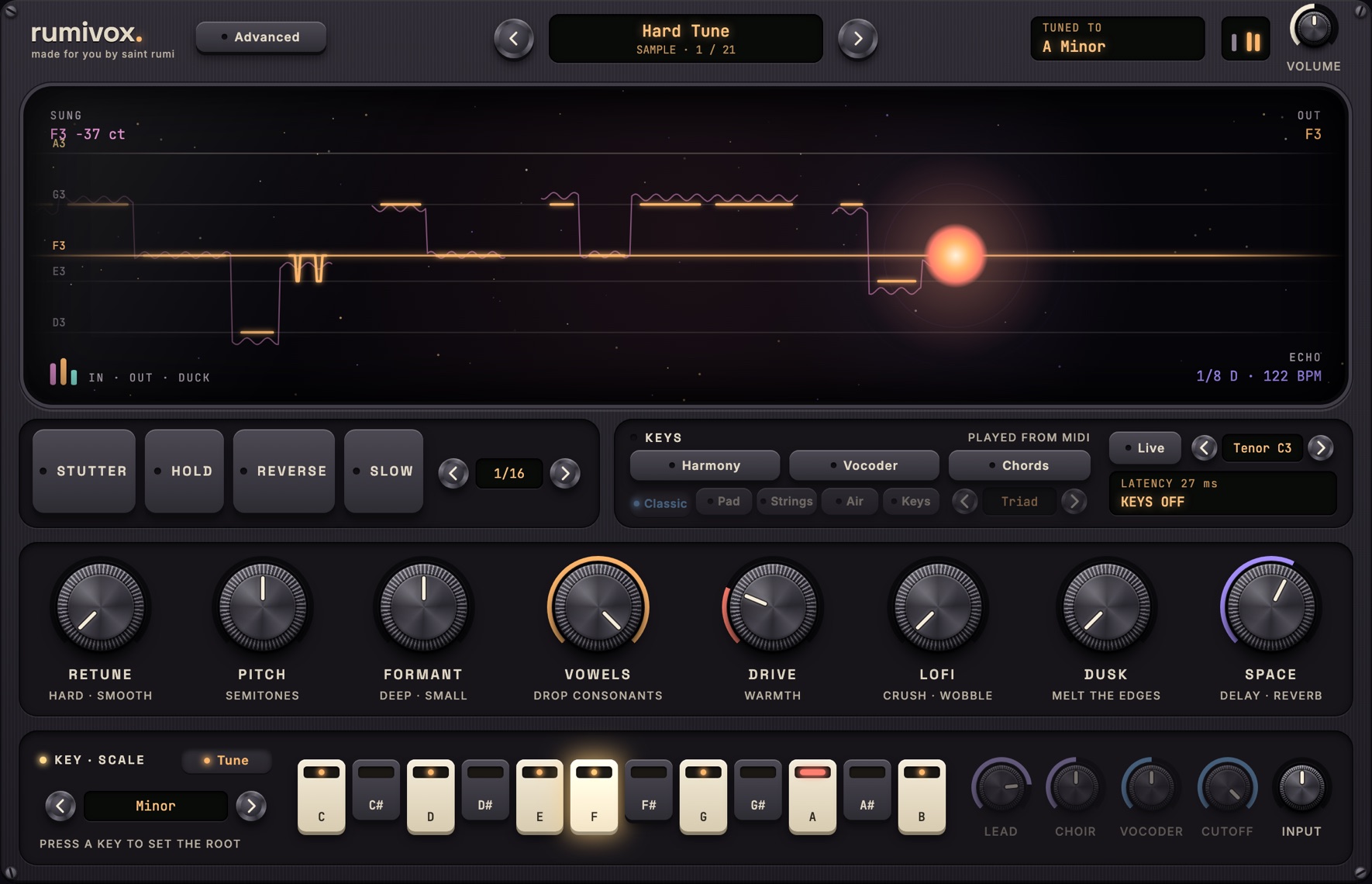
The real panel, running in your browser on a stand-in signal. Turn the knobs. It makes no sound here.
It finds
the vowels.
One knob brings out the sung middle of each vowel and lets everything else fall away.
- Consonants, breaths and the slides between notes fade out. What is left is a set of clean, playable chops, each one in your scale.
Every note
finds its key.
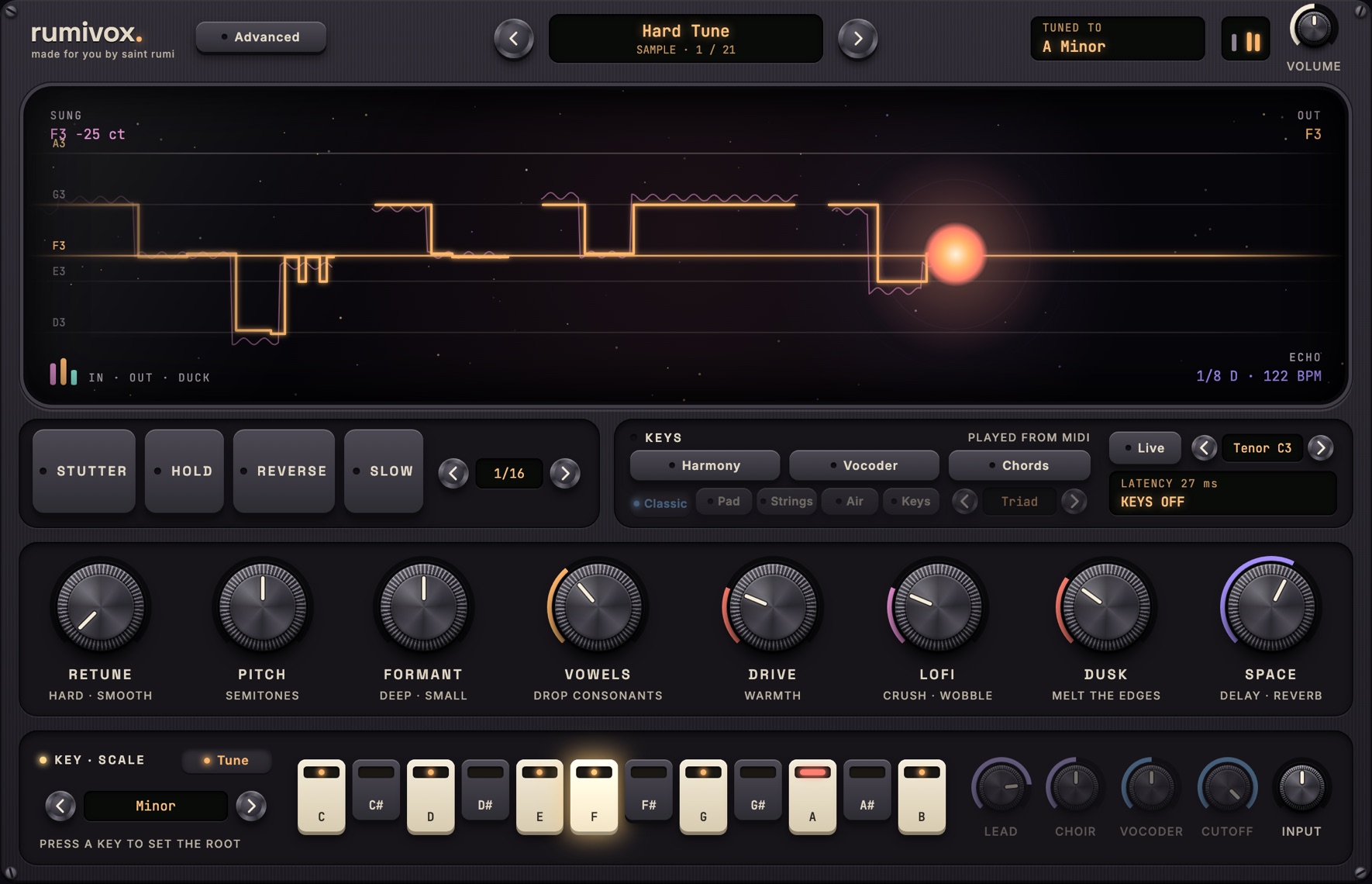
Set the key and scale of your track. 13 scales, including all seven modes plus harmonic and melodic minor.
- Hard and stepped, or smooth. Retune sets how fast each note snaps onto pitch.
- Move the pitch without losing the key. Drop an octave or push it up a fifth. It still lands in the scale.
- Formant on its own. A deeper throat or a smaller one, without changing the note. It moves the harmonies and the vocoder too.
A choir
on your keys.
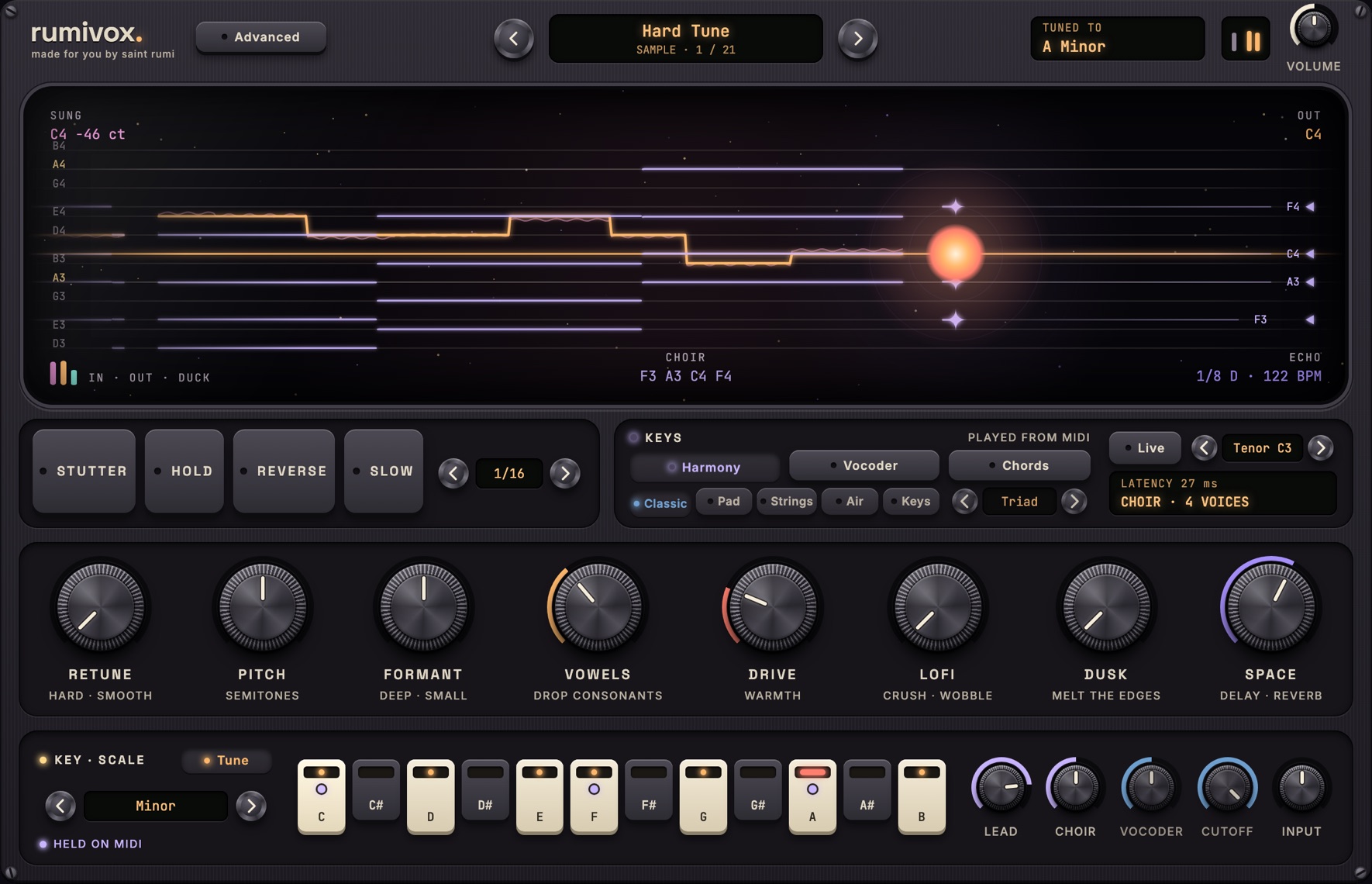
Route a MIDI keyboard in. Every key you hold sings a copy of your voice on that note, up to eight at once.
- Your voice, not a synth. Each copy keeps your formants, so the stack still sounds like you.
- Hard puts every voice right on its key. Follow keeps your scoops and vibrato.
- Detune, Timing and Width loosen the stack and spread it across the stereo field.
- Lead sets your own voice under the choir, down to off.
- Live mode. No plugin latency on your voice, so you can sing and play at the same time. The harmonies follow a few milliseconds behind.
Or let your voice
play a synth.
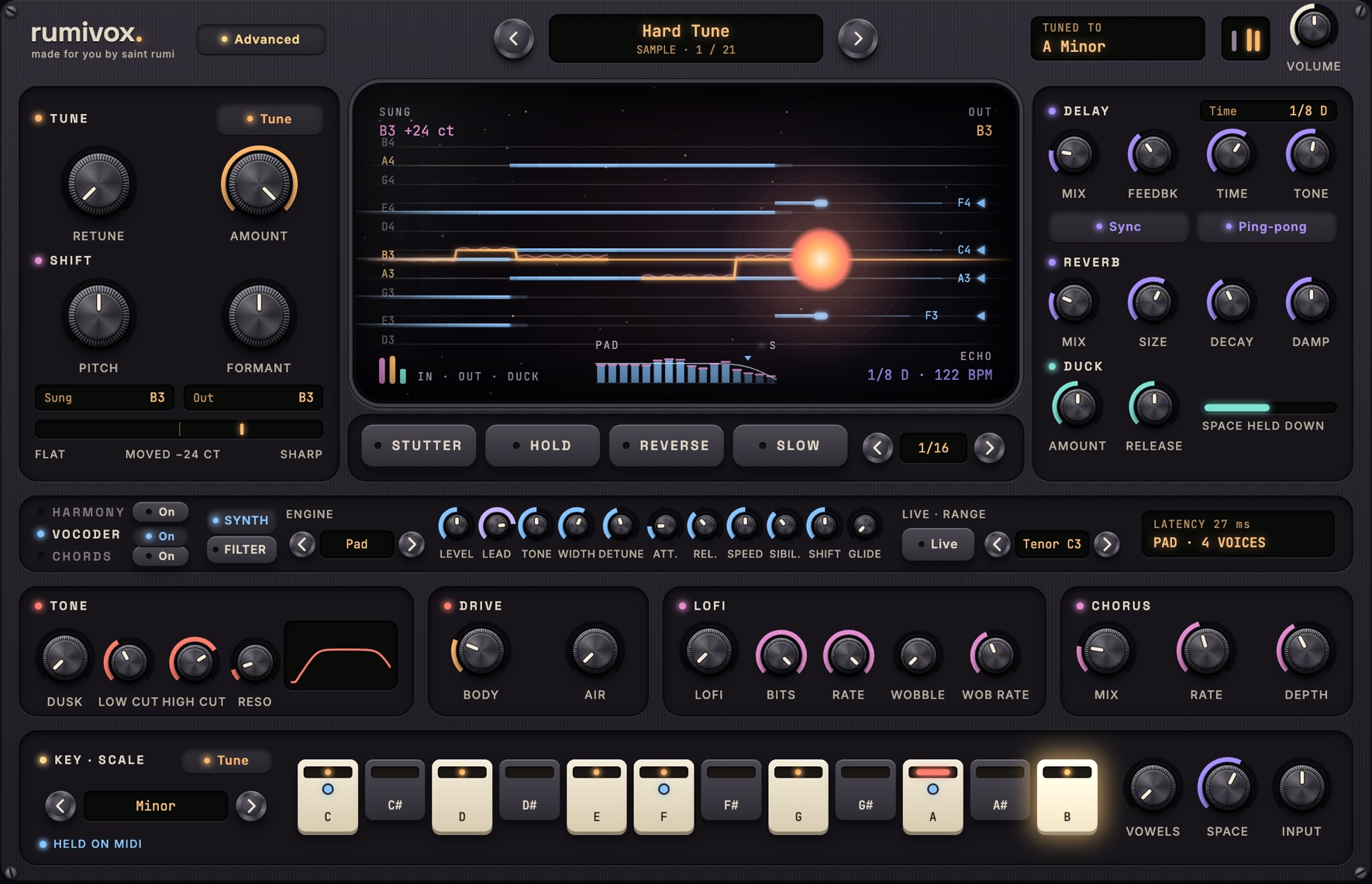
The same keys can play a vocoder. You sing, and the synth says the words.
- Five engines. Classic is the bright robot voice. Pad is warm and blurred. Strings is wide and moving. Air is breathy, like a whispering choir. Keys is a clean electric piano.
- A real synth filter on every voice. Low-pass 12 or 24, band-pass, high-pass, resonance, its own envelope, key tracking and a stereo split.
- The words stay clear. The “s” and “t” sounds bypass the synth and its filter, so closing the filter darkens the synth, not the words.
- Attack and Release per voice, so a pad can swell in and hang after you let go.
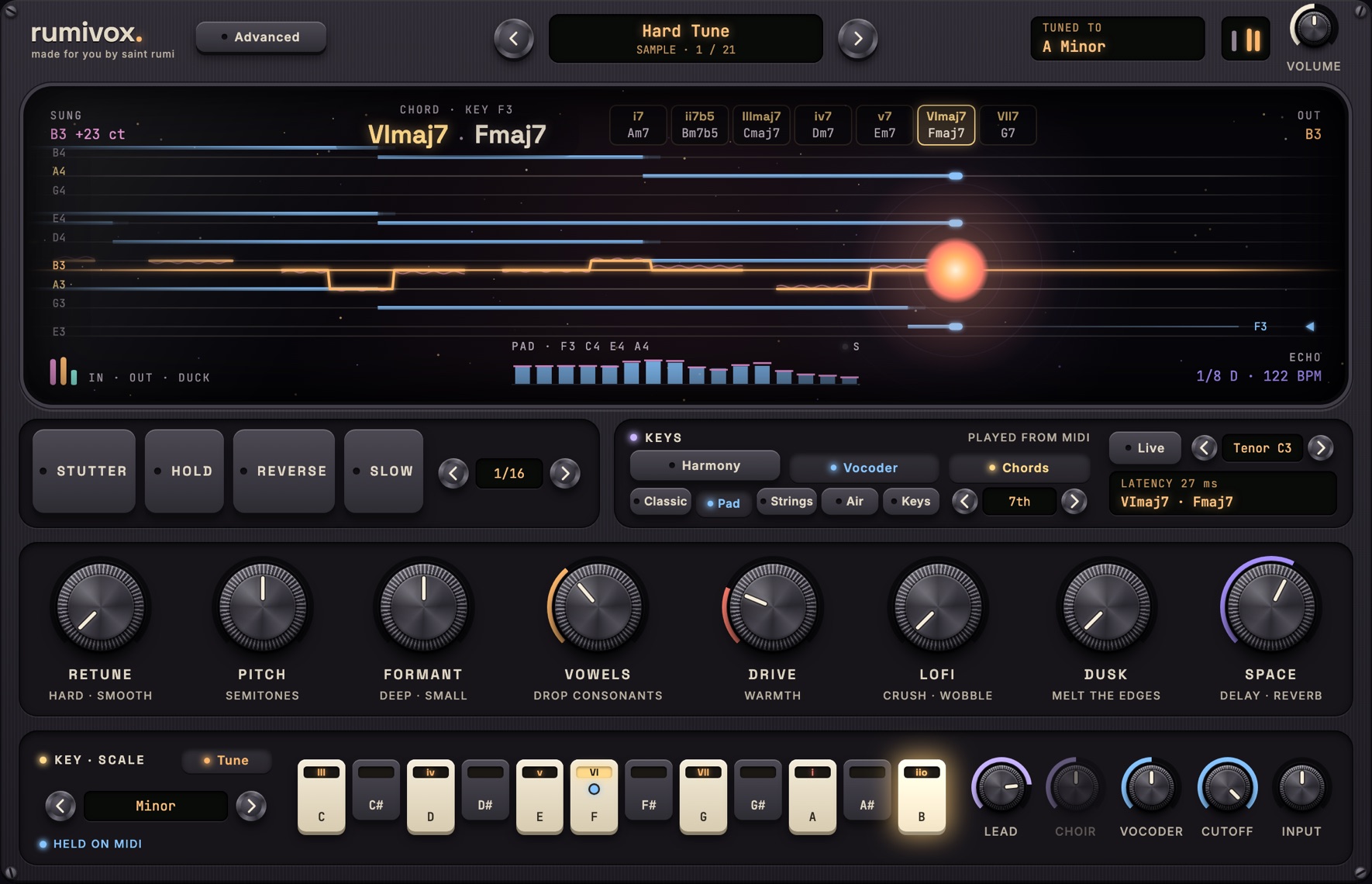
One key.
Whole chord.
Turn on Chords and each key picks a degree of your key and scale. The chord on it fills in.
- Triads, 7ths, 9ths, sus2, sus4 and add9, built from the scale’s own notes.
- Close or Open voicing. Voice Lead picks the inversion that moves least from the last chord, so a progression stays smooth and in one place.
- It feeds the harmonizer and the vocoder, so one finger plays a choir or a pad.
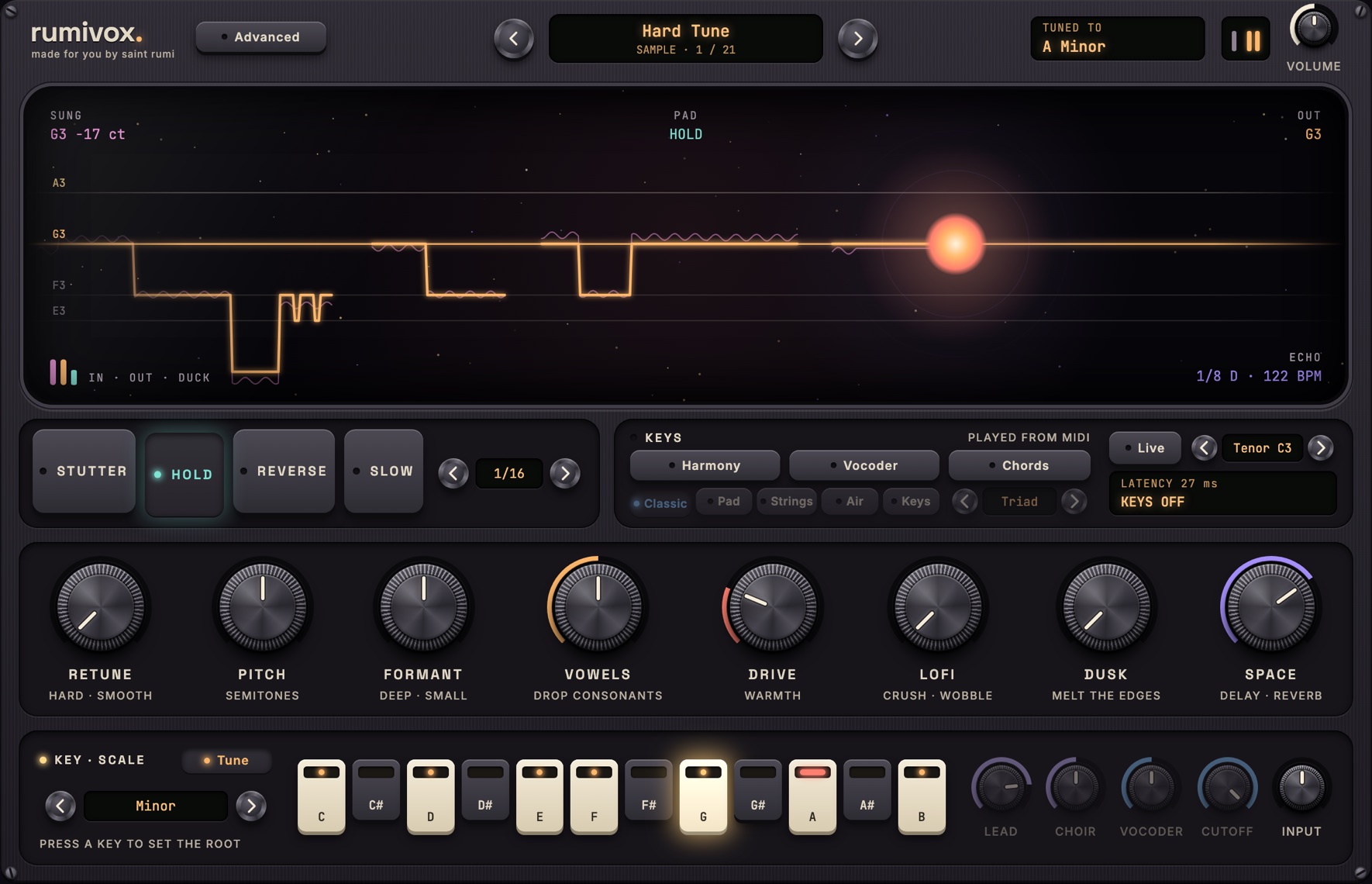
Now make
it move.
Four pads. Hold them to play, or map them to your controller.
- Hold loops the last vowel into a sustained note, even after the singer has stopped.
- Stutter repeats the last slice in time with your tempo.
- Reverse plays it backwards. Slow brings it down like a tape stopping.
- Delay and reverb duck under the voice and open up in the gaps.
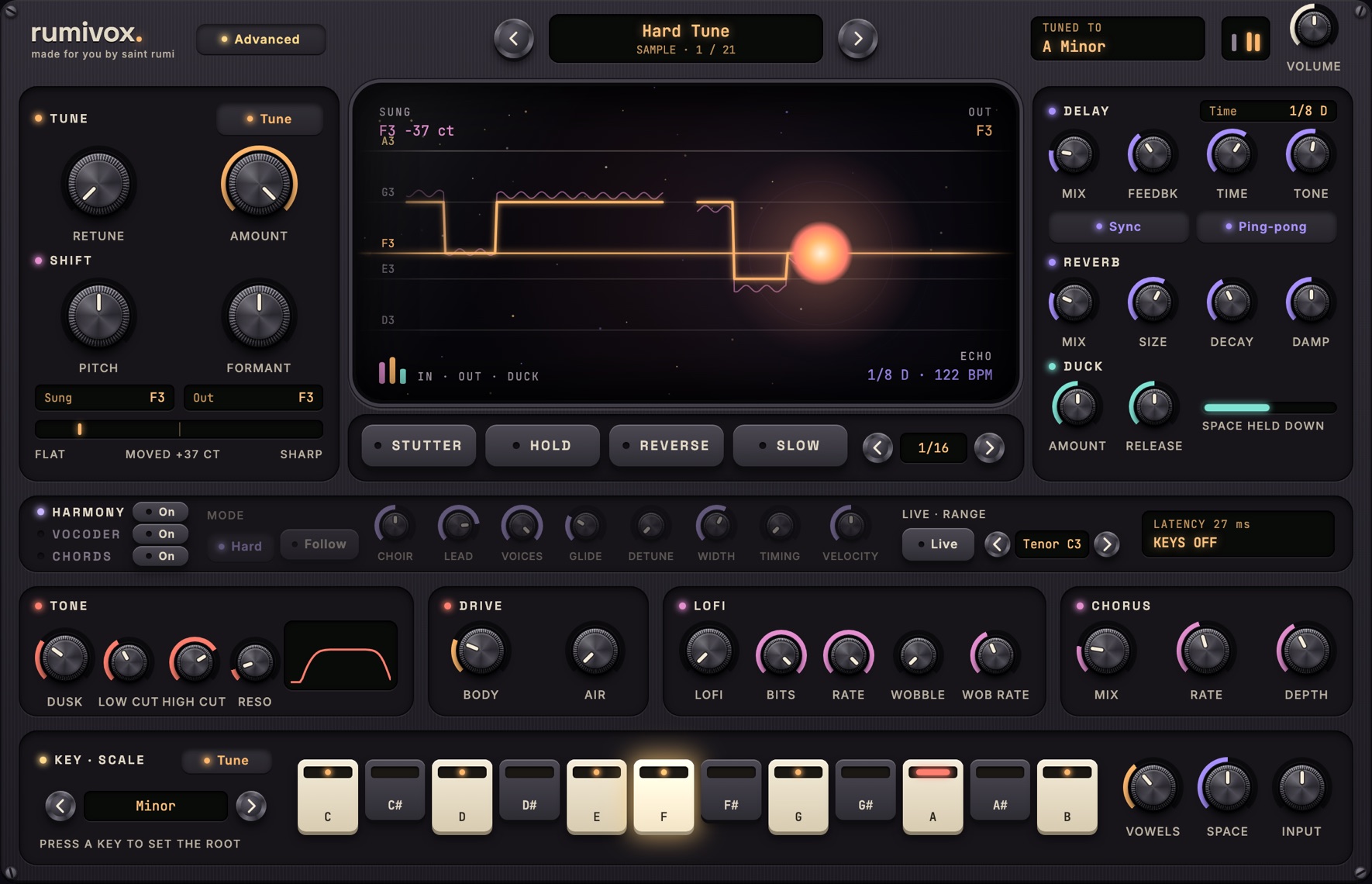
Twenty-one places
to start.
Ten SAMPLE presets for a recorded vocal. Eleven MIDI presets that sing when you play keys.
rumivox.
VST3 · AU · AAX
macOS 12 or later · Apple Silicon and Intel · Windows 10 or later · 64-bit